
New national study names MICROCRAFT as a key enabler of the UK microsystems sector
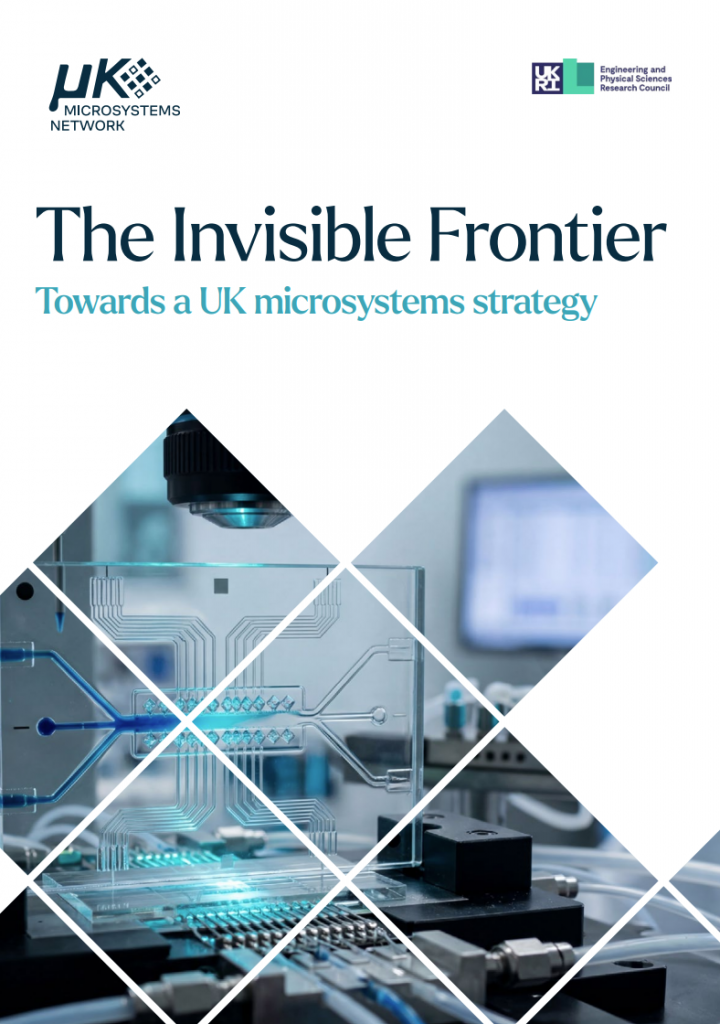
A major new study of the UK microsystems sector has been published on 17 June 2026, and MICROCRAFT is identified as one of the key infrastructure enablers needed to translate the country’s world-class research into lasting industrial advantage.
The Invisible Frontier: Towards a UK Microsystems Strategy (UK Microsystems Network, 2026) is the first comprehensive assessment of the UK microsystems sector. Commissioned by the UK Microsystems Network with support from the Engineering and Physical Sciences Research Council (EPSRC), it brings together an economic impact assessment, an analysis of global market trends, a review of the UK’s strategic strengths and vulnerabilities, and five practical recommendations for policy and industry.
The report quantifies a sector that has long operated beneath public and policy awareness. According to The Invisible Frontier (UK Microsystems Network, 2026), microsystems firms generate £2.1 billion in direct output and contribute £860 million to UK gross value added, directly supporting 8,970 jobs. Including supply chain effects, the sector’s total economic footprint rises to £3.1 billion in output, £1.3 billion in GVA, and more than 15,000 jobs, with output per worker some 26 per cent above the national median.
MICROCRAFT at the centre of the infrastructure recommendation
The study sets out five recommendations, the third of which concerns shared fabrication and advanced packaging infrastructure. It explicitly calls for support for the launch and operation of MICROCRAFT as the UK’s open-access microsystems development platform, alongside extended shared advanced packaging capability that complements the heterogeneous integration research agenda emerging from the CHIMES Innovation and Knowledge Centre.
MICROCRAFT features prominently in the report’s analysis of the UK’s distributed fabrication infrastructure. The study describes the MICROCRAFT facility at Southampton, currently seeking dedicated funding, as poised to become an ecosystem anchor in translating low technology readiness level research into manufacturable devices once operational, by offering open-access technology development for micro- and nano-electromechanical systems to both researchers and companies without in-house capability.
The report also frames MICROCRAFT in the context of a capability gap the UK has been working to address. Following the narrowing of domestic open-access foundry options in recent years, the study notes that the connection between design and manufacturing in the UK has weakened, and identifies MICROCRAFT, as an investment through which the UK could restore the missing design-to-fabrication link. It records that MICROCRAFT is being developed between Southampton and Bristol, in partnership with Siemens Cre8Ventures, building on the model demonstrated by Cornerstone in photonics, and that early custom fabrication services are already being offered from the Zepler Cleanrooms, one of Europe’s most advanced fabrication environments.
Why it matters
The Invisible Frontier makes the case that the UK is well placed to compete in microsystems, not on manufacturing volume, but through the depth of its engineering expertise, the quality of its research base, and its existing industrial activity. The report argues that competitive advantage is increasingly decided at the packaging and integration stage, which can account for up to 80 per cent of device cost, aligning with established UK strengths.
For MICROCRAFT, the study provides independent, evidence-based recognition of the platform’s intended role: a sovereign, open-access capability that reduces barriers to entry, supports the UK microsystems workforce, and accelerates the journey from research to sustainable innovation.
About the study
The Invisible Frontier: Towards a UK Microsystems Strategy was written by Adam Green and Samantha Guerriero at Type Ventures, with economic modelling by Gabriele Bowen at Mount Crescent Research, and includes a foreword by Dr Gerard Cummins, Associate Professor at the University of Birmingham. The full report is available from the UK Microsystems Network: Download the report here.